Samantha Luke
Software Engineer | she/her
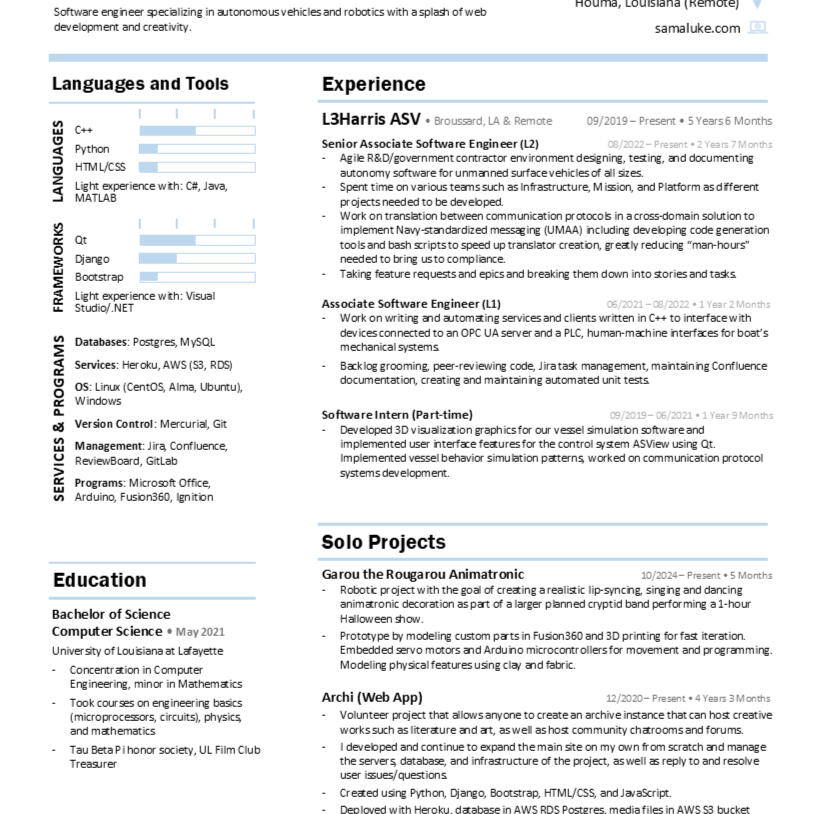
Software engineer specializing in autonomous vehicles and robotics with a dash of web development and various creative endeavors.Check out my Resume or Projects!

About
Hi! I'm Sam, a Cajun software engineer from Southeastern Louisiana with a bad habit of collecting new hobbies. I love doing anything creative I can get my hands on and try to tie a piece of coastal Louisiana culture into every new endeavor.A small subset of my endless amount of hobbies and interests:
- Software & Web Development
- Arduino & Hardware/Software Tech, Robotics
- Gardening, Farming, & Food Preservation
- Wood Working & Construction
- Art & Animation
- Videography & Film
- Creative Writing
- Project Planning
- Theme Park Ride Tech/Design (Animatronics, Ride Vehicles)Many of my evenings involve rotating between hobbies and playing fetch with my Border Collie, Brie.


click on a project image to go to details page
Robotics & Hardware/Software Tech
Garou the Rougarou
A Rougarou animatronic that lip-syncs and dances to Halloween music as part of a programmed cryptid band performance.
Coda
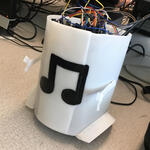
An Arduino-powered dancing robot that plays music based on sensor input.
Software & Web Development

Archipelago Archives
A Django web app that gives people the power to host and control their own creative communities.

Asteroid Field
A MATLAB space-themed obstacle avoidance game where a user avoids asteroids while driving a rocket ship.
Salvo
.NET two-player battleship game that can be played over LAN.
Gardening & Food Preservation
- WIP -
Woodworking & Crafts
- WIP -
Art & Animation
- WIP -
Videography & Film
- WIP -
Garou
A Rougarou Animatronic
October 2024 - Present
An animatronic that performs Halloween music
Design & Planning
The idea is to create an animatronic band that can perform my favorite Halloween songs at a Halloween party. It'll be a full band with ~12 members including a mummy, the Honey Island Swamp Monster, a skeleton, zombies, creatures from the Black Lagoon, a vampire, and our very own Garou the Rougarou on lead vocals who will be the first animatronic to be made.
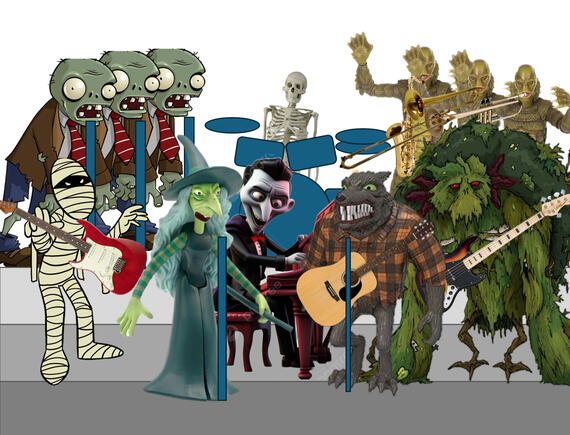
The animatronics will be scaled to be about 3' tall on average and have the goal of getting as realistic lip-syncing as possible.
3D Modeling & Prototyping
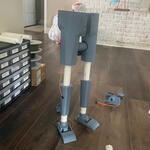
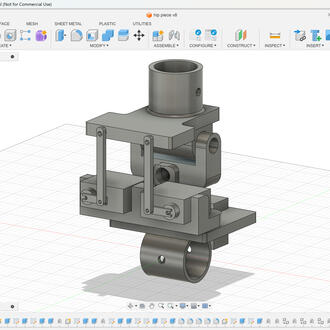
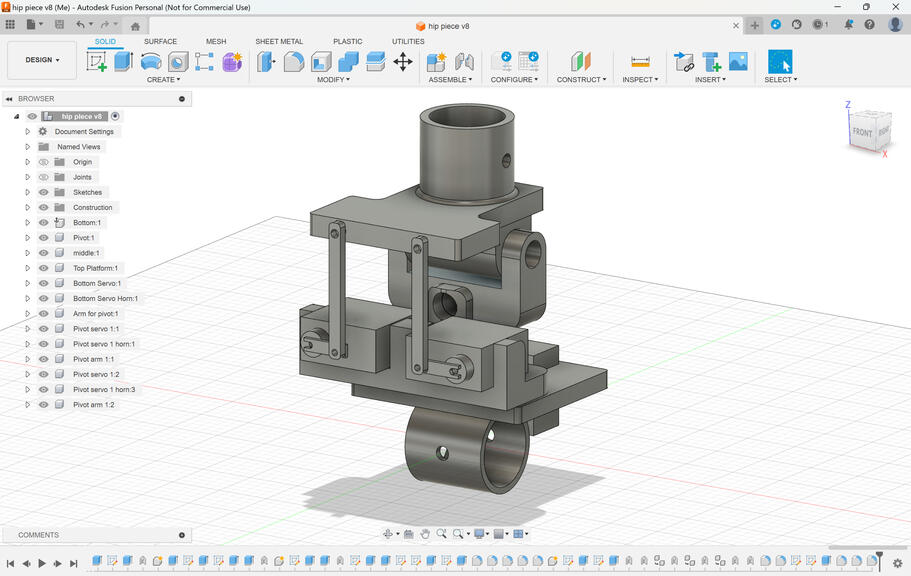
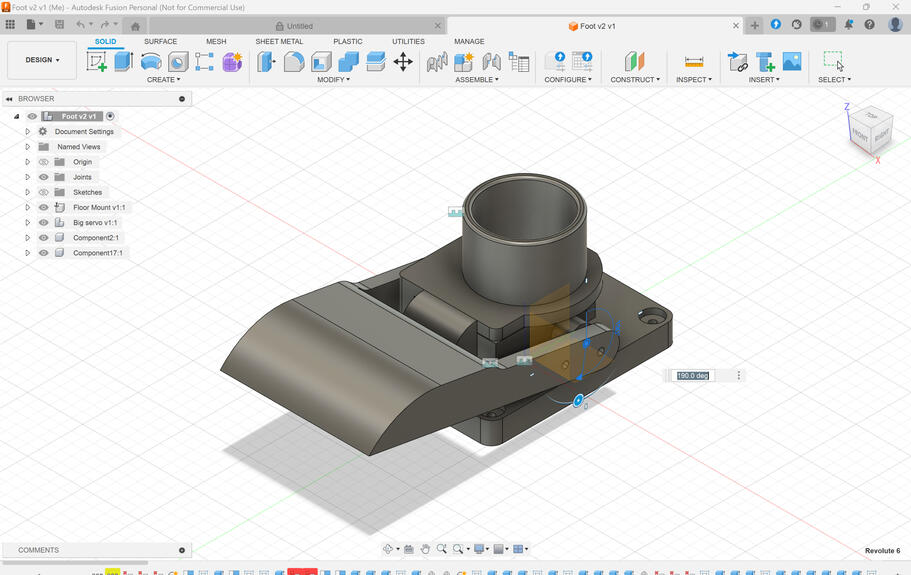
For this project, I started learning how to model 3D systems in Fusion 360 that way I can test out movements of servos and their effects without wasting any time creating physical versions that might not work as expected.Below is my current model for the neck/hips. It is a 3-axis rotational joint that connects a horizontal 1" PVC pipe to a vertical 1" PVC pipe. Using two servos in the front to tilt the top platform and one servo in the back to pivot the entire platform allows a wide range of motion. Using Fusion 360's components and joints, I was able to test the movements.Under that is my design for the feet. It is designed to be secured to a platform at the bottom and connect to a static 1" PVC pipe at the top. The foot is then connected by arms to a single servo that will allow the foot to be animated as if it were taping to the beat.
Also to aid in fast and easy prototyping, I started delving into 3D printing with a Bambu A1 to print the components I created in Fusion 360. Other than the 3-axis joint, I created several connectors for PVC pipes, STLs of which can be found on my MakerWorld. I'm currently in the process of creating designs for the eyes and mouth.
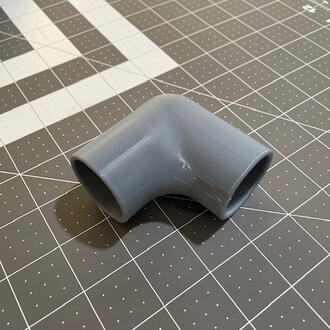
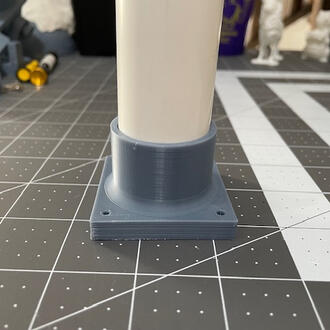
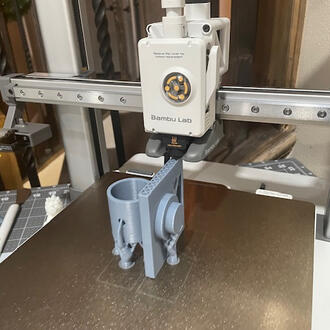
Covering the mechanics and the PVC structural pipes, and to fill out the shape of Garou, I modeled and printed frames that wrap around the pipes and are held together with embedded magnets for easy access to the internals.
Crafting
Other components to go on top of the mechanical parts need to be created from other materials such as faux fur and fabric which will be sown together to make his fur and clothes to go over the 3D printed frame concealing the mechanics.
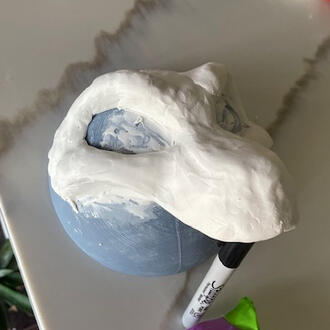

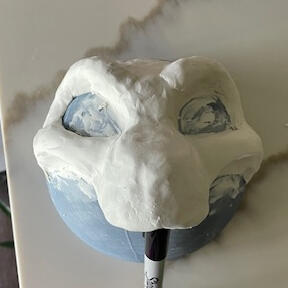
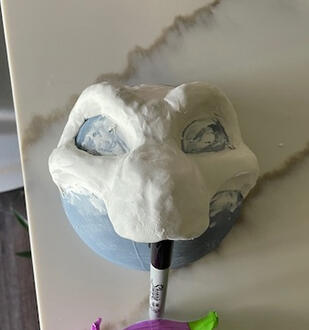
I modeled the face shape with clay on a 3D printed sphere base to compensate for my lack of 3D modeling skills. I plan to scan the clay mold using a phone app to convert the scan to an OBJ file that can be 3D printed at a larger, lighter, and thinner scale for the final face frame. This will also make it easier to construct the eye and mouth mechanisms at the proper scale.
Current State
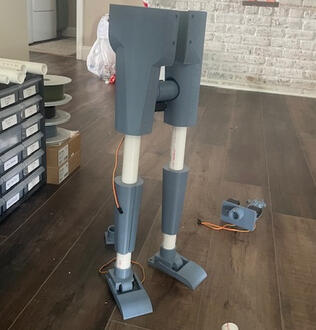
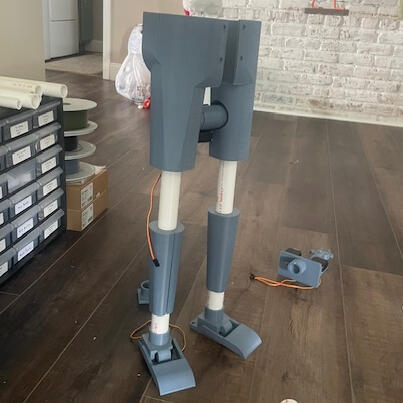
Garou is currently just a set of legs. Here you can see the frames that go over the PVC pipes. I decided to start from the bottom up to ease into the process and learn modeling as I go.
Coda the Musical Robot
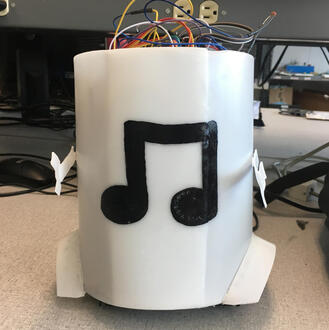
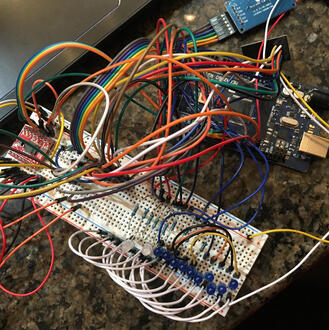
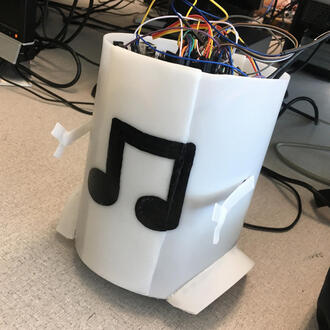
Arduino-based Dancing Robot
April - May 2018
A funky little robot that dances to its own music
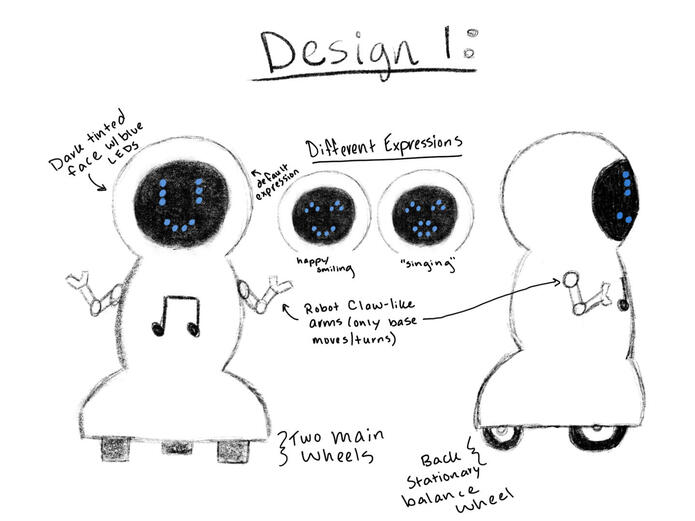
Coda is a musical robot whose main goal is to aid others in having a good time through the use of music and sometimes even a little dancing. Coda’s name has a musical origin; a coda is the last few measures of a musical piece, typically differing from the main theme and added on to give a sense of closure.
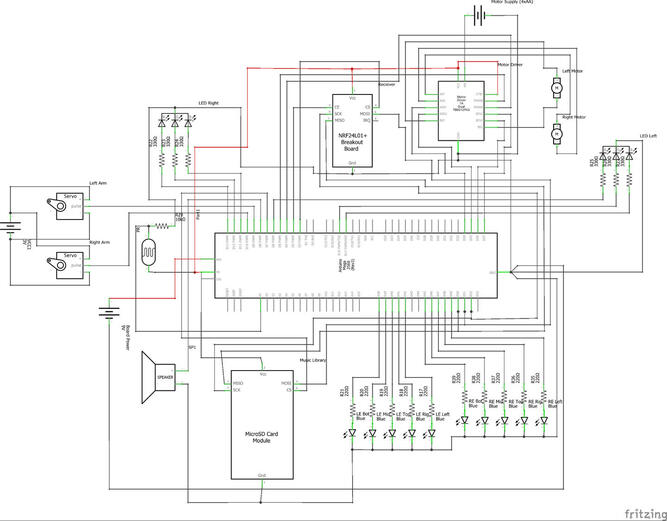
While Coda does have the ability to be driven around on two wheels controlled by the joystick on the controller, the main attraction is its ability to play music based on the room’s mood, or rather, the light. Using the power of a photoresistor, Coda is able to determine the amount of light in the room/area and play music according to the specified modes chosen on the controller.
There are four main modes, as well as a few extra features that alter those modes. The first of the main mode is the “volume toggle” mode. When activated, the volume of the currently playing song will be altered based on the light in the room. The second main mode is the “genre toggle” mode, or more accurately, the tempo toggle mode, where different songs will be played based on their genre/tempo, that correspond to the light in the room. The third main mode is the combination of the two previous modes, but where both genre and volume toggle together. The fourth main mode of Coda is the “party mode,” which is where the entertainment comes in the form of flashing lights, and a little robot dancing.
The other features that alter these four main modes add another level to Coda’s musical abilities. The most important is the “light mode toggle”, which reverses the effect of the light level effects on the first three main modes. The initial state upon startup is the normal light mode, where less light means lower volume, or a slower tempo song. With the activation of this toggle, however, the effects are switched, and less light means higher volume, or a faster tempo song. Another feature on the controller is the mute button, that will mute/stop the music. The final additional feature is ability to give Coda a voice in the form of a series of random phrases, honking, and beeps.
Coda was created as a final project for a microprocessors class lab. He was never fully completed and has since been shelved.
Demonstration of current progress: